

Cape Agalina
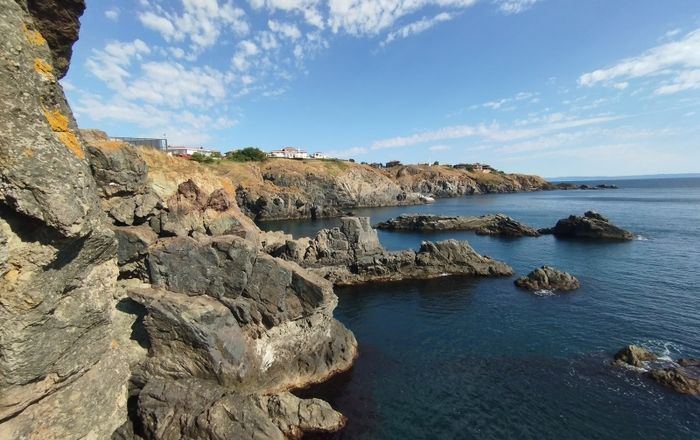
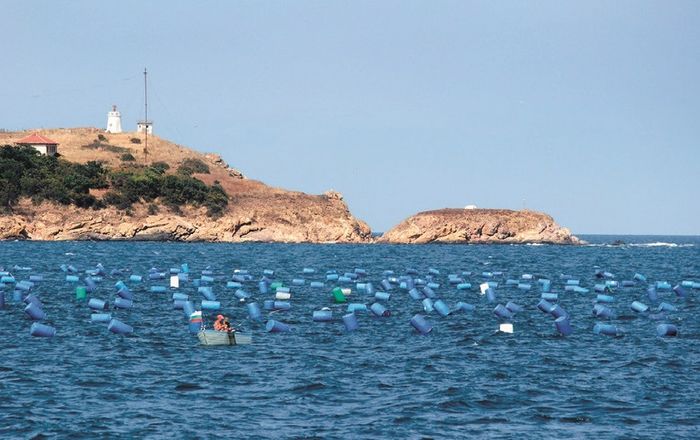
Cape Agalina (also known as St Agalina) is a rocky coastal phenomenon and officially protected natural landmark located on the Southern Black Sea coast, about 10 km south of Sozopol and 5 km north of Primorsko, between the town of Sozopol and the Dyuni holiday complex, in Sozopol Municipality, Burgas Region. The protected area covers 27.2 hectares and was included in the list of protected natural landmarks in 1980. The cape is distinguished by its striking and unusual geological character — tectonic shifts have bent and fractured the coastal rock into a system of narrow sea-filled clefts known as pseudo-fjords, the most dramatic of which is a tight rocky gorge about 20 metres long, through which only a small boat can pass. Viewed from the hill above, this passage resembles a secret pirate hideaway, and the wider bay and rock formations of the cape are often compared in miniature to the fjords of Scandinavia. The protected area is rich in characteristic coastal flora — rock rosemary, geranium, thyme, black pine, downy oak, field ash and cypress — and above the surf zone several species of rock lichen grow. The waters around the cape are home to green, brown and red algae and are a natural habitat of the black mussel; a mussel farm has been established in the adjacent bay with European Union funding and can be seen from the shore. The area is also known for sport and amateur fishing, mainly from the cape itself, with shad and gobies among the catches.The name Agalina has two main proposed etymologies. The most widely accepted traces it to an old pagan custom in which Sozopol fishermen's wives, during fierce and prolonged storms, would throw a handful of earth from the cape into the sea and say "Να γαληνη" (Na galine) — meaning "let it calm down" in Greek, referring to the sea. The second links the name to the Thracian name for Sozopol, in which "aga" meant "sea." The cape is also known locally as "Germanskata" ("The German Woman"), after a tragic event in 1959 when a young German woman, Hella Schröder, was sitting on one of the rocks looking out to sea when a sudden wave swept her into the water; her body was never found. The poet Hristo Fotev, who spent his summers in nearby Ravadnivo, later wrote one of his most celebrated poems inspired by her story: "The sea loves only the living."