
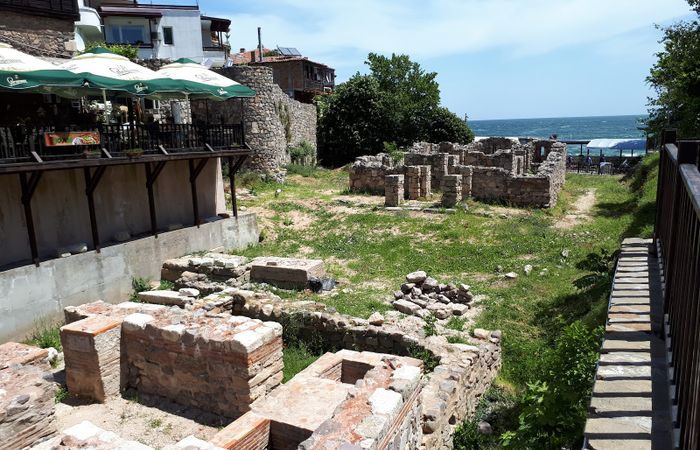
Arch of the ancient city of Apollonia
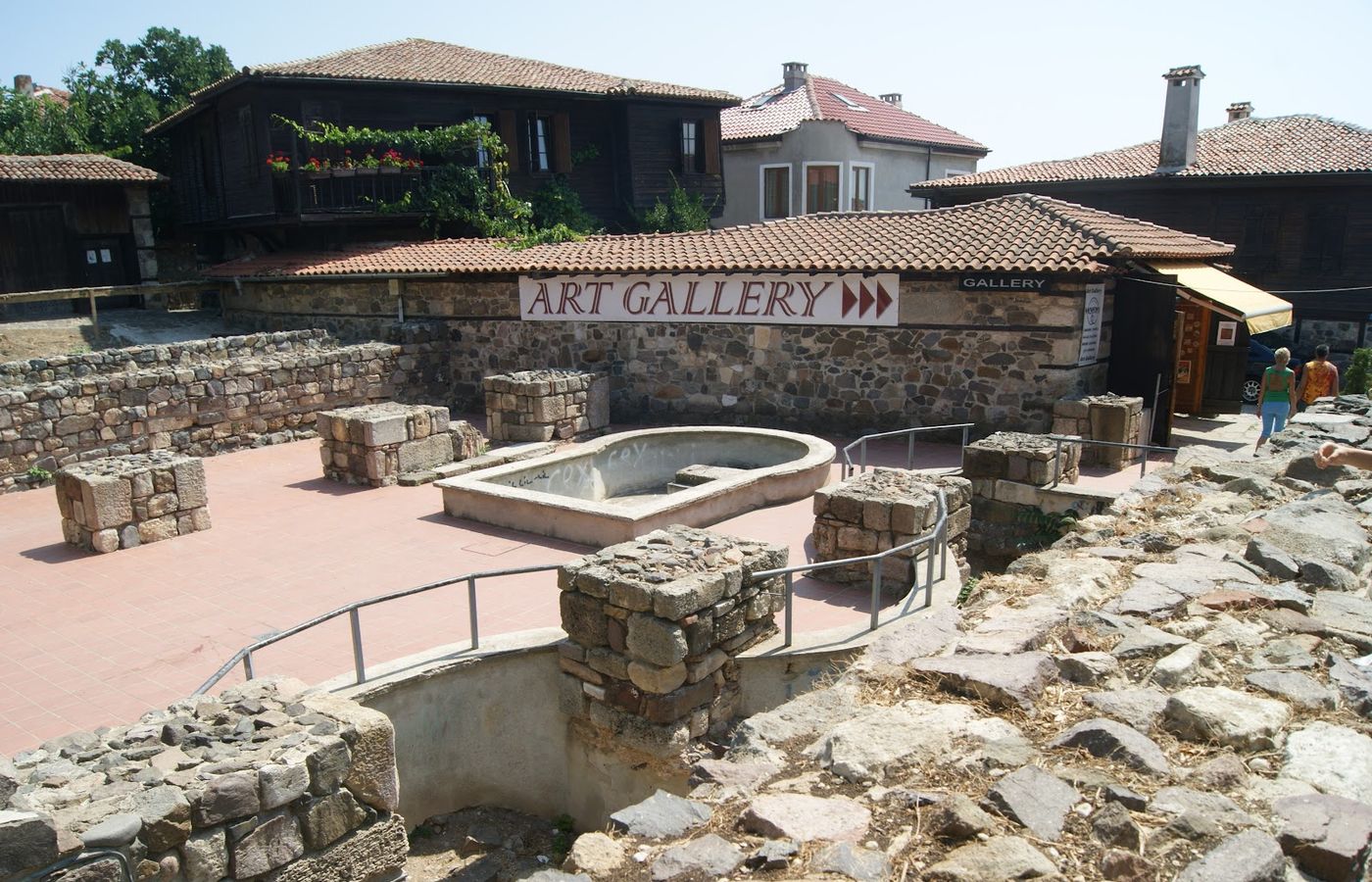
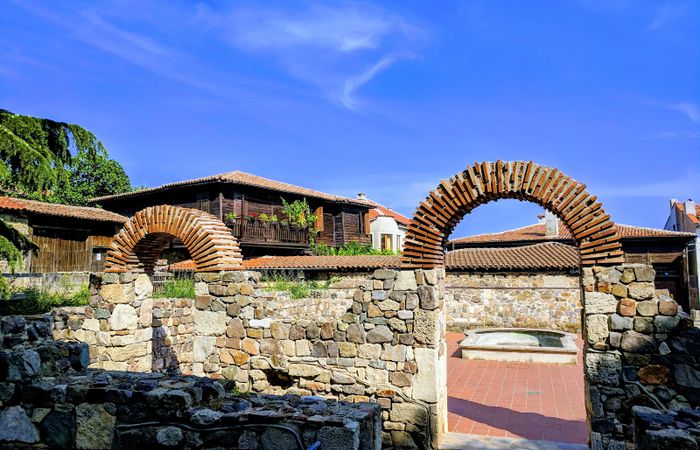
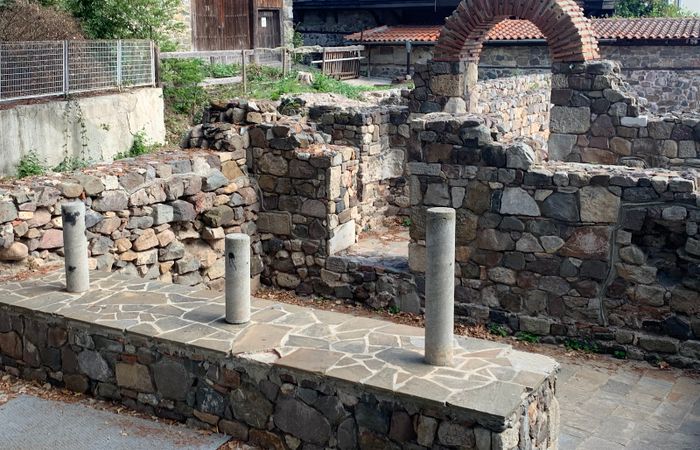
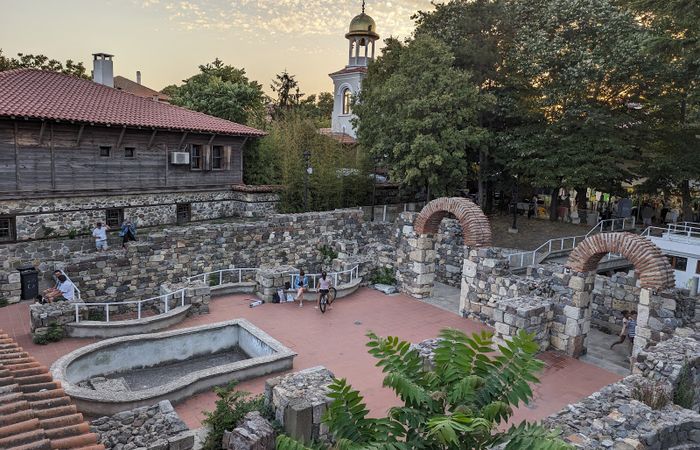
The Arch of the Ancient City of Apollonia is one of the most evocative and historically significant landmarks in the Old Town of Sozopol, located in the heart of the old quarter, between the two main streets — Apollonia and Saints Cyril and Methodius — in Sozopol Municipality, Burgas Region. The arch, which today survives as two restored stone arches standing side by side, is the central and most visible surviving element of a medieval Christian complex that served as the seat of the Sozopol Episcopate from the 10th to the 17th century — a direct testament to the city's importance as an ecclesiastical centre throughout the Middle Ages. The complex was built on the foundations of an early Christian basilica constructed in the 5th century AD, itself raised on the site of structures from the ancient city of Apollonia Pontica, making the arch a layered monument that compresses more than fifteen centuries of continuous history into a single spot.The arch survived the turbulent chapters of the city's history, including the devastating raids of the Ottoman period, but the wider Christian complex of which it was part was ultimately destroyed by the Ottoman authorities in the late 17th century on the pretext that pirates were sheltering within it. Throughout all the centuries of its existence the complex was richly decorated with fine frescoes and elaborate mosaic floors, of which no trace is visible today. The remains of the arch are freely accessible to visitors and stand on open ground in the busiest part of the Old Town — modest in scale and easy to miss amid the narrow cobbled streets, but unmistakably ancient in character. Apollonia Pontica itself, founded around 610 BC by colonists from the Ionian city of Miletus on the site of an older Thracian settlement, grew into one of the first city-states on the Balkan Peninsula to mint its own coins — bearing the images of Apollo and Medusa Gorgon — and one of the earliest places in the Balkans to embrace Christianity.


