

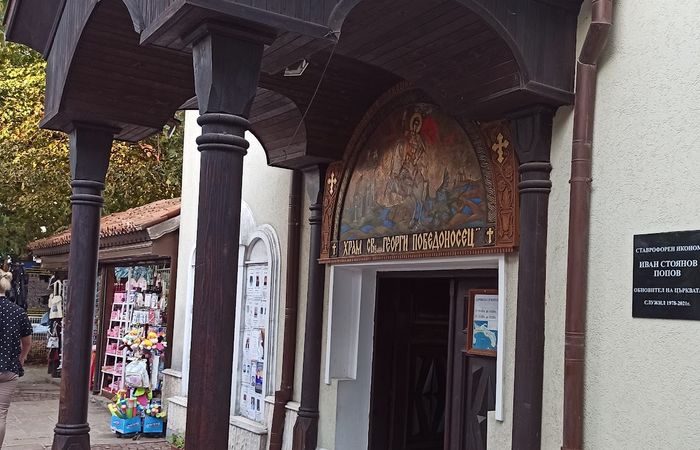
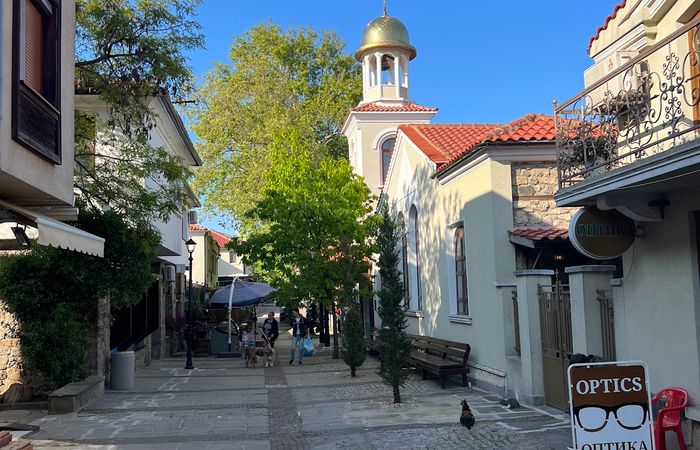


Church of St. George The Victory-Bearer
The Church of St George the Victorious is the largest active Orthodox church in Sozopol and one of the most significant Bulgarian National Revival churches on the Black Sea coast, located in the Old Town of Sozopol, in Sozopol Municipality, Burgas Region. The church was built in 1828 on the site of an older basilica and served as the cathedral of the Sozopol Eparchy. The building is a three-nave, single-apse pseudo-basilica, rebuilt and renovated several times over the years, with the last major reconstruction completed in 1991. The church takes its name from St George the Victorious — one of the most venerated saints of the Eastern Orthodox Church — a soldier and military commander of the Roman Empire who was martyred for his Christian faith in the early 4th century and is commemorated on 6 May (Gergyo vden). In Sozopol he is also associated with the local tradition of breaking the Easter cross and casting it into the sea.The church holds an extraordinary collection of Christian relics and religious objects of national and international significance. Among them are fragments of the relics of St John the Baptist, found on the nearby St Ivan Island in 2010 — which were kept here temporarily until their transfer to the Church of Saints Cyril and Methodius in 2011, when that church was restored, and which brought a remarkable influx of pilgrims from across Bulgaria and beyond. The church also houses a fragment of the Holy Cross, part of the relics of St Andrew the First-Called (the Apostle associated with the founding of the Christian community in the Balkans), a glass vial of myrrh from the relics of St Nicholas of Myra, and a wonderworking icon of the Holy Mother of God Kosinitsa, in which relics of St Petka, St Haralampios, St Panteleimon, and St Dionysius are embedded. The permanent collection of icons — works of the 19th century — includes pieces by the celebrated Sozopol icon painter Dimitar Sozopolchanina and other Revival-era masters. On the icon of St George in the church, Athonite monks have depicted the relics of the saint found in Sozopol, making the icon a unique visual record of the discovery.


