


St. Zosim Church Църква Св. Зосим
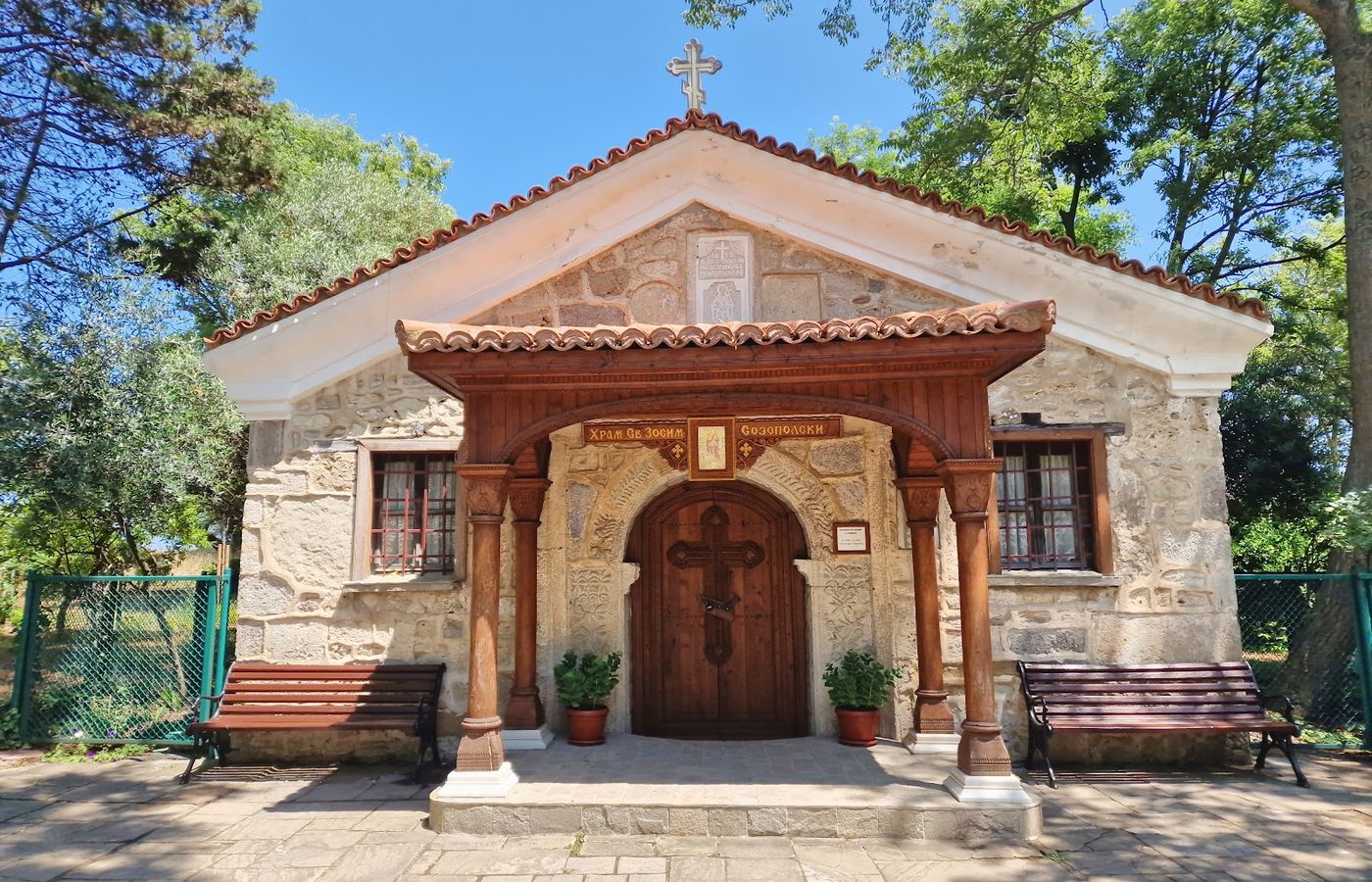
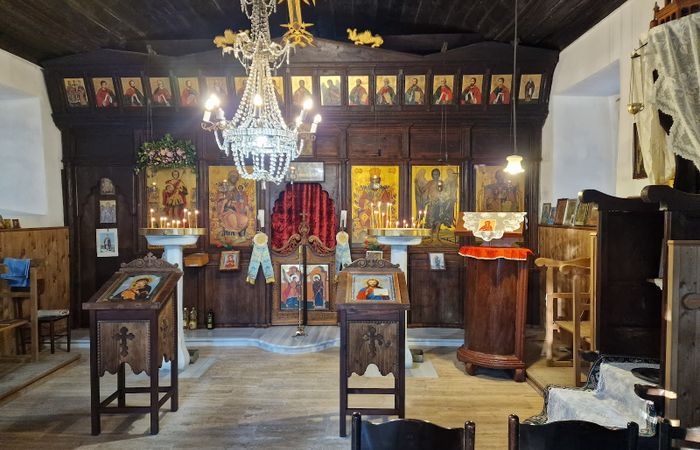
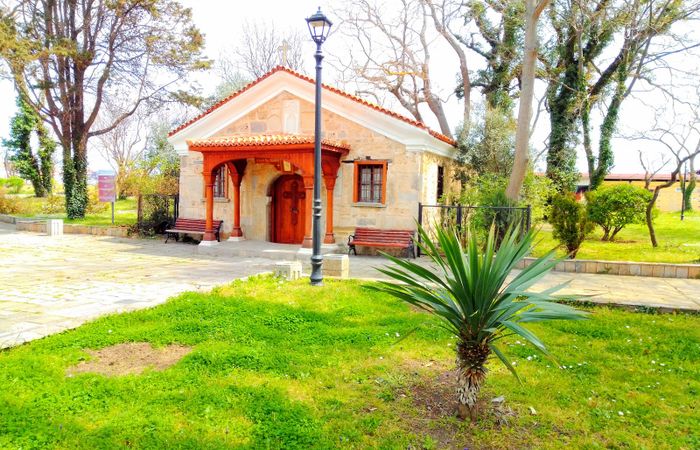
Отлично — имам богата информация. Ето текстовете в новия формат: English: The Church of St Zosim of Sozopol is a small but historically and spiritually significant Orthodox church located in the Municipal Park (the Sea Garden) that separates the Old Town from the New Town of Sozopol, in Sozopol Municipality, Burgas Region. The church was built in 1857 on the ruins of an earlier medieval temple, during the Crimean War, with the assistance of two English individuals, and is an architectural and construction monument of culture of local significance. It is a single-nave, single-apse stone building constructed of hewn stone with a semi-cylindrical vault, modest in scale and resembling in appearance a distinguished chapel rather than a full church — an impression reinforced by its setting in the park greenery, with a vaulted entrance and a wooden canopy above it. The church takes its name from St Zosim the Martyr of Sozopol — the patron saint of the town — who according to hagiographic tradition was a native of the city in the period when it was known as Apollonia and lived during the reign of the Roman Emperor Trajan (98–117 AD). He is mentioned in the Typikon of the Great Church of Hagia Sofia from the 9th–11th century on the date of 19 June. It should be noted that the historical connection between the martyr Zosim and the city of Sozopol appears to be based on a similarity of names — scholars have noted that the martyr was originally associated with the city of Sozopolis in Pisidia in Asia Minor, and that the Sozopol on the Black Sea adopted him as its patron by exploiting the coincidence of the two cities' names, a practice paralleled elsewhere in Bulgarian hagiographic tradition. Despite the scholarly uncertainty about his origins, the name of Zosim enjoys exceptional popularity in Sozopol to this day. The icons in the church are the work of the celebrated Sozopol icon painters Dimitar (Dimitar Sozopolchanina) and Yani — among the most important Revival-era artist-craftsmen of the town — as well as a number of other significant icons from the second half of the 19th century. Embedded in the western facade of the church, to the right of the entrance, is a marble funerary stele from the 5th century BC of an Apollonian citizen originally from the ancient city of Amphipolis (near modern Kavala in Greece) — an extraordinary detail that combines ancient Apollonian history with the 19th-century church in a single wall.


