


Lake Pomorie
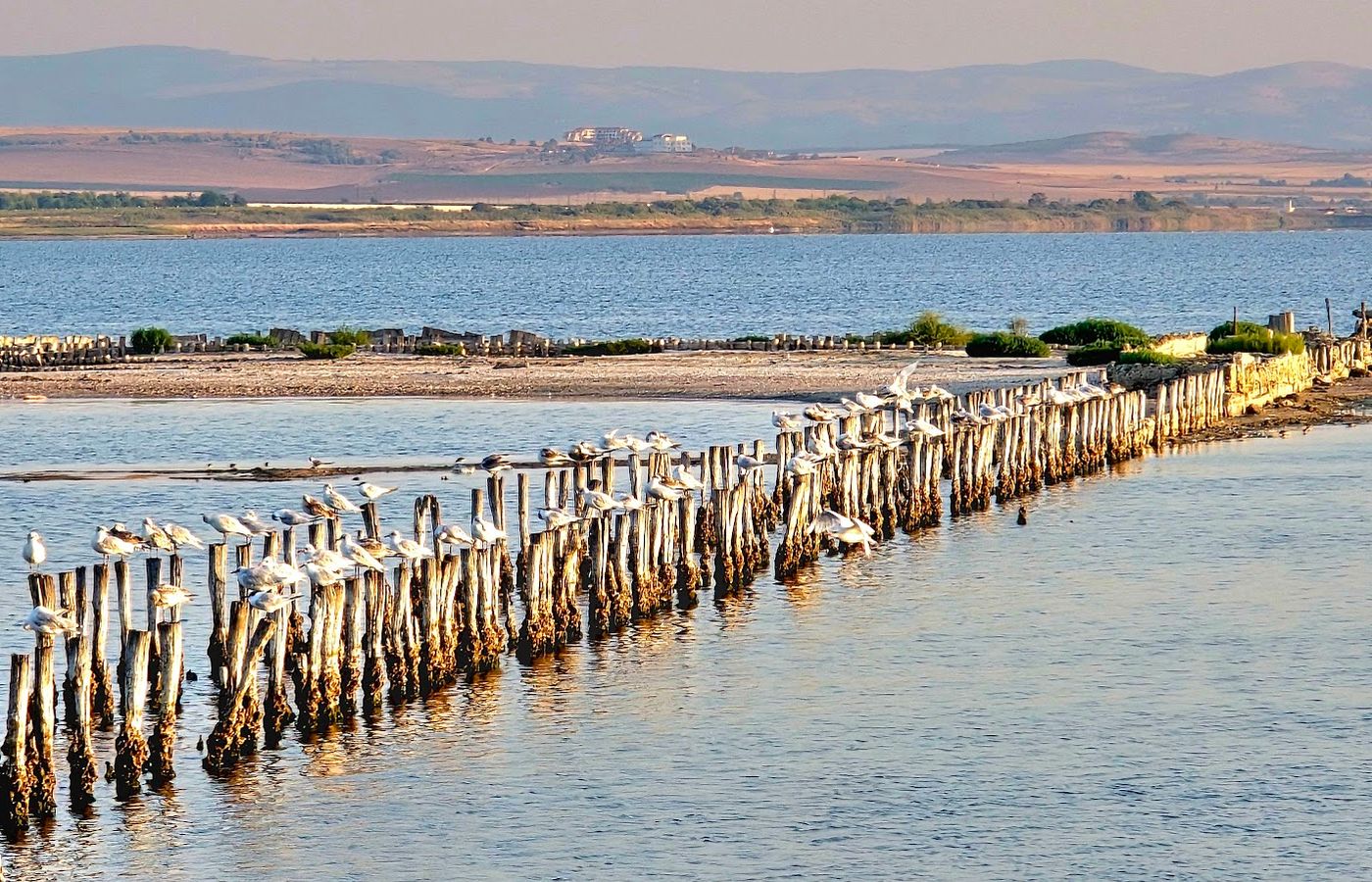
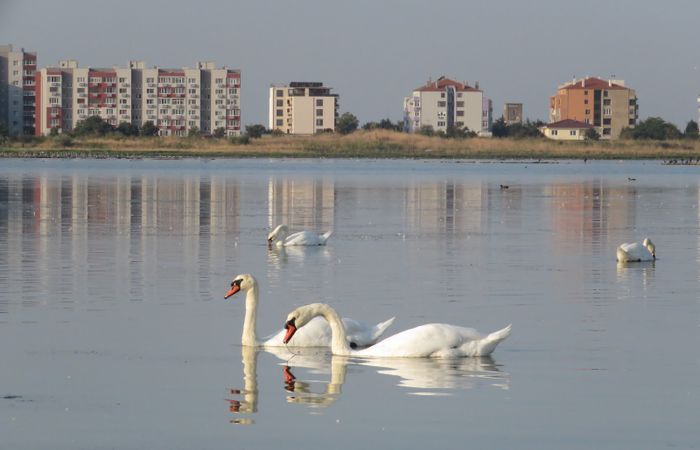
The Pomorie Lake is a natural supersaline coastal lagoon located immediately north of the town of Pomorie, in Pomorie Municipality, Burgas Region, on the Bulgarian Black Sea coast. With an area of 714 hectares, it is one of the four large coastal lakes of the Burgas Lake Complex — alongside the Atanasovo Lake, the Burgas Lake, and the Mandra Lake — and despite its relatively modest size ranks third among Bulgarian Black Sea wetlands for bird species diversity, with 268 recorded species. The lake is separated from the sea by a natural sandy tombolo and an artificial embankment; only in its southern part does a connecting channel allow the inflow and outflow of seawater, maintaining the lake's characteristically high salinity.The Pomorie Lake holds an exceptional suite of international conservation designations. It is a Protected Locality under Bulgarian legislation (2001), a Ramsar Wetland of International Importance (2004) — one of eleven Bulgarian sites on the world list of the Convention, registered under number 1229 — and since 2007 a Natura 2000 protected zone within the European ecological network. In 1998 it was designated an Important Bird Area. The total biodiversity documented in the lake and its surrounding protected territories encompasses 71 taxa of algae, 87 species of higher plants, 200 taxa of invertebrates, 7 species of fish, 17 species of amphibians and reptiles, 268 species of birds, and 31 species of mammals — representing 27 mappable habitat units under the Palaearctic Habitat Classification. The lake lies on the Via Pontica — the second largest bird migration route in Europe — which accounts for the extraordinary richness and diversity of its avifauna. Breeding species include the avocet (sabeklyun), the black-winged stilt (kokilobegach), the little tern, the Kentish plover, and many others. For over 25 years the lake has been the focus of the annual Conservation Brigade "Pomorie Lake" — one of the most well-known ecological volunteer initiatives in Bulgaria — organised by the Green Balkans Federation. A Visitor Centre for the Pomorie Lake operates on the lake shore as a branch of the Pomorie Historical Museum, equipped with professional optical instruments and staffed by ornithologists who assist visitors in observing and identifying birds; special cameras installed in the salt pans allow viewing of the nesting colonies.The lake is also the source of the therapeutic mud for which Pomorie is famous — a highly mineralised peloid of liman type, whose healing properties for musculoskeletal and skin conditions are used at the Pomorie Open-Air Mud Therapy Site and the town's balneological facilities. The lake and its associated salt pans represent one of the finest examples in Bulgaria of the harmonious coexistence of traditional human activities — salt production and mud extraction — with exceptional natural biodiversity.


