
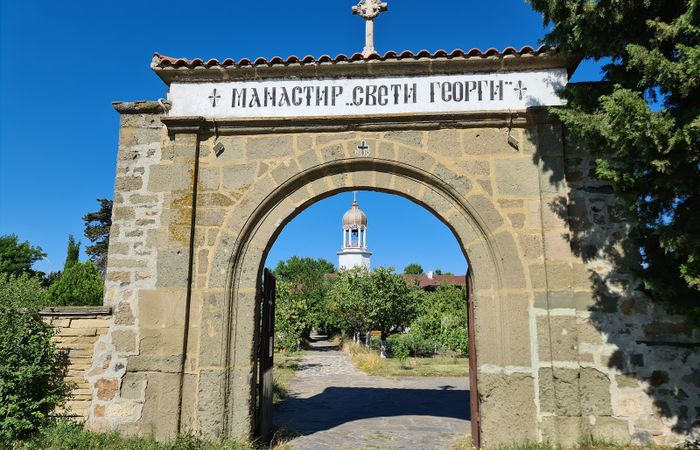
"Saint George" Monastery
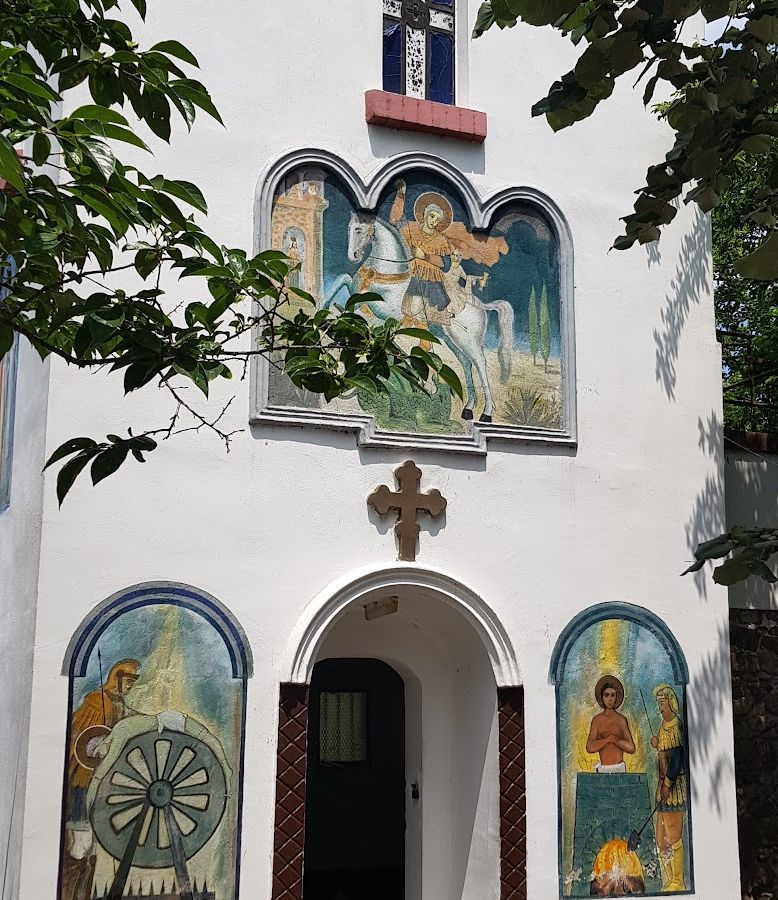
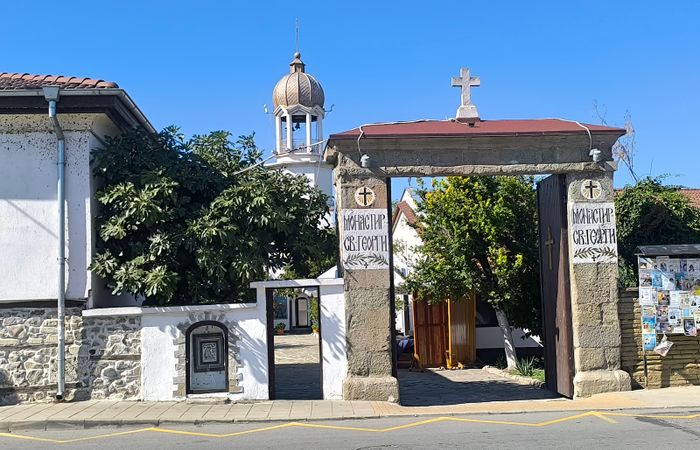
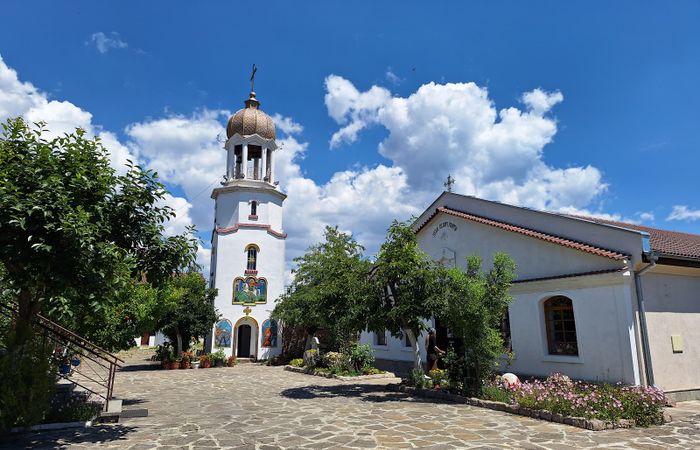
The Pomorie Monastery of St George the Victorious is the only active male monastery in Southeastern Bulgaria and one of the most venerated sacred sites on the Bulgarian Black Sea coast, located in the centre of the town of Pomorie, between its old and new parts, in Pomorie Municipality, Burgas Region — approximately 20 km north of Burgas. The monastery is easily accessible on foot from any part of the town and is visited year-round by hundreds of pilgrims and tourists. The monks are hospitable and offer overnight accommodation within the monastery.Christianity came early to Pomorie — then known as Anchialos — with evidence of a Christian community as early as the 2nd century AD and of Christian monks visiting the town from the 3rd–4th centuries. The Pomorie Monastery was founded by Greek settlers in the 7th century, destroyed by the Ottomans at the end of the 14th century, and owes its current existence to one of the most extraordinary legends in Bulgarian ecclesiastical history. According to tradition, in the late 17th century a gravely ill Ottoman official named Selim Bey settled on the site of the destroyed monastery and built a farm estate there. One night — in some versions of the legend through a dream of Selim Bey himself, in others through his worker Dyado Neno — he was directed to dig in the courtyard, where he discovered a marble relief of St George, beneath which a spring of healing water appeared. Selim Bey drank from the water and was healed; the miracle moved him to convert to Christianity along with his entire family, after which he built a small chapel beside the spring — the beginning of today's monastery. After his wife's death he became a monk and subsequently the first abbot of the monastery, donating his entire estate of 3,800 decares to it, and was buried beside the spring on his death. The marble relief of St George he discovered is still preserved in the monastery today. The current church was built in 1856 on the foundations of the earlier temple; in 1945 it was enlarged with two lateral chapels dedicated to St Nicholas of Myra and to the Holy Martyrs Sophia, Faith, Hope, and Love; and in 1966 a 20-metre bell tower was added. A stone icon of St George is set into the wall above the church entrance, and the magnificent carved wooden iconostasis was executed by craftsmen from the Tryavna School. The temple icon of St George was painted by the Pomorie artist Themistocles Diamandopoulo Zograf. The monastery's healing spring — with a relief of St George set above its spout — is believed by the faithful to cure eye diseases and non-healing ulcers, but only on the condition that the pilgrim spends the night at the monastery in the days around St George's Day (Gergyo vden, 6 May). Every year on 6 May — the feast day of the monastery and simultaneously the official day of the town of Pomorie — a traditional fair is held in front of the monastery, drawing visitors from across the country. The monastery is also renowned for its aromatic wine.


